Volatility Trading: Top 5 Strategies Explained
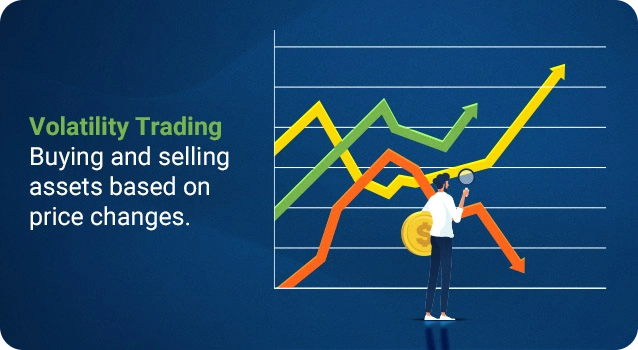
Volatility Trading is all about embracing market movement. Instead of betting on whether prices go up or down, you’re trading the size of the move — and that’s what makes this strategy so powerful.
In this guide, we’ll simplify everything you need to know: how Volatility Trading works, how to measure it, and which strategies to use across CFD and options trading. Even if you’re completely new, don’t worry, we’ve got you covered.
What is Volatility Trading
At its core, Volatility Trading is a strategy that profits from the extent an asset moves — not the direction it moves in.
While most trading strategies try to avoid volatility, this one thrives on it. The more unpredictable the market, the more opportunity volatility traders see. You’re not trying to guess “up or down,” but “how much.”
This makes Volatility Trading especially useful in high-risk markets, such as CFDs and options trading, where prices can swing quickly and significantly.
Why trade Volatility?

Designed for unpredictable markets
Profit from price swings in either direction
Ideal for fast-paced CFD and options trading
Works during market stress, not just trends
Whether you're trading a volatile currency pair or riding out a stock spike, volatility provides the opportunity to act fast and smart.
How to measure Volatility
To trade volatility effectively, you need to know how to spot it. There are a few tools traders use to measure volatility. Let’s break down the best one for CFD trading.
Standard Deviation: Your go-to tool
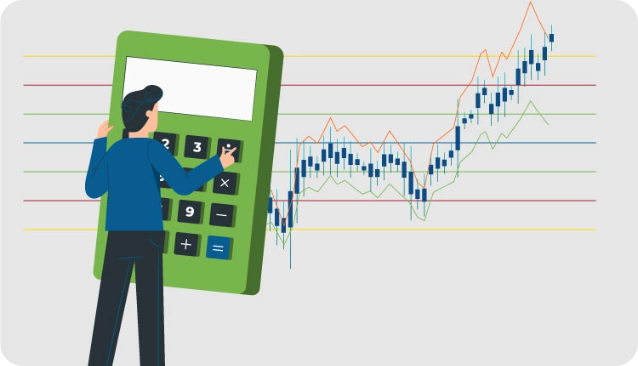
Standard Deviation measures how much an asset’s price moves away from its average. The higher the number, the more volatile the market.
Here’s the simplified formula:
SD = √[ Σ (Pi - Pavg)^2 / (N - 1) ]
where:
- Pi= closing price
- Pavg= average closing price
- N= number of periods
This helps you see how wild the price swings are. The bigger the Standard Deviation, the bigger the swings.
Why Standard Deviation?
Works across all markets (not just stocks or options).
Simpler than more complex tools like the VIX.
Gives you a clear, data-backed view of historical volatility.
Heads up: This tool is based on past prices, not future predictions. But that’s okay, since it still helps you spot patterns and prepare.
The Top 5 Volatility Trading Strategies
Ready to put volatility to work? Here are five effective strategies you can use, especially for CFD trading.
![1]() Volatility Spreads
Volatility Spreads
 Volatility Spreads
Trade multiple positions to profit from the widening gap between them. This is great for balancing risk and reward in both calm and chaotic markets.
![2]() Long Volatility
Long Volatility
 Long Volatility
Bet on big price moves in either direction. This is ideal when you expect the market to shake things up.
![3]() Short Volatility
Short Volatility
 Short Volatility
 Think markets will stay calm? This strategy profits when volatility drops. It’s ideal for range-bound or stable conditions.
![4]() Long Straddle (for Options Trading)
Long Straddle (for Options Trading)
 Long Straddle (for Options Trading)
Buy both a call and a put option. If the market swings big in either direction, you win. If it doesn’t? Risk is limited to the cost of the options.
![5]() Mean Reversion
Mean Reversion
 Mean Reversion
Volatility doesn’t stay high or low forever. This strategy bets on a return to the average. It takes good timing, but the payoff can be worth it.
Volatility across markets: Where price swings create opportunity
Volatility doesn’t show up in one particular market – it’s everywhere. And that’s a good thing.
At easyMarkets, you can trade CFDs on a wide range of instruments, including forex, stocks, indices, commodities, cryptocurrencies, and precious metals. Each of these markets reacts to different drivers, but all offer price movement, which is exactly what volatility traders look for.
Let’s review how volatility plays out across key markets:
![forex]() Forex
Forex
 Forex
ForexThe forex market is built on movement. Currency pairs respond to central bank decisions, interest rate changes, and geopolitical news. This makes forex ideal for volatility strategies like Long Volatility or Mean Reversion, especially during high-impact news events.
![stocks]() Stocks
Stocks
 Stocks
Company earnings, leadership changes, or market sentiment can send stock prices soaring or tumbling. Event-driven volatility is ideal for CFD traders who want to act quickly, taking advantage of sharp movements in individual equities.
![INDICES]() Indices
Indices
 Indices
Indices like the S&P 500, NASDAQ, or DAX reflect the performance of entire markets. When economies shift or big headlines break, they can move fast. That’s why indices are great for Volatility Spreads or Straddle strategies, especially when trading index-based options.
![commodities]() Commodities
Commodities
 Commodities
From crude oil to wheat, commodities are heavily influenced by global supply and demand. Whether it’s an OPEC meeting, extreme weather, or geopolitical unrest, commodity prices can react swiftly, giving volatility traders clear opportunities to act.
![Cryptocurrencies]() Cryptocurrencies
Cryptocurrencies
 Cryptocurrencies
Crypto is famously volatile. Bitcoin and altcoins can experience double-digit swings in a single day, driven by regulatory developments, macroeconomic news, or social media hype. Just remember, high risk requires solid risk management.
![Metals]() Precious Metals
Precious Metals
 Precious Metals
Gold and silver are classic safe-haven assets, but that doesn’t mean they’re stable. During periods of inflation, economic instability, or market fear, precious metals can become highly volatile. This makes them ideal for traders looking to hedge or speculate on uncertainty.
Get started with Volatility Trading
If you're a trader who enjoys quick decisions, active risk management, and spotting patterns in chaos, volatility may be just your thing.
Use tools like Standard Deviation to measure price swings. Pick a strategy that aligns with your goals. And always, always manage your risk with features like Stop Loss and Take Profit.
Key takeaways
Volatility isn’t something to fear, but something to use to your advantage. Whatever instrument you choose, volatility can be your biggest asset if you know how to handle it.
So, explore these strategies and start turning wild price swings into smart trading decisions.
Volatility Trading is all about embracing market movement. Instead of betting on whether prices go up or down, you’re trading the size of the move — and that’s what makes this strategy so powerful.
In this guide, we’ll simplify everything you need to know: how Volatility Trading works, how to measure it, and which strategies to use across CFD and options trading. Even if you’re completely new, don’t worry, we’ve got you covered.
FAQs
During major events such as earnings releases or economic data drops, when markets tend to move the most.
Start with a demo account on platforms like easyMarkets. You’ll get used to tracking volatility without risking real money.
Yes, the easyMarkets trading platform offers tight fixed spreads, risk management tools like Guaranteed Stop Loss with No Slippage*, and leverage up to 1:2000 on MT5. Moreover, the platform is user-friendly and supports CFD trading across volatile markets, including forex, stocks, and crypto.
*Guaranteed Stop Loss with no Slippage is only available on easyMarkets web & app trading platform. Activate with a wider spread for total risk control.